

Team conflict is not rare. We see it in missed handoffs, cold meetings, silent resentment, and sudden exits. What often gets missed is this: the real damage is not only the clash itself. It is the loss of trust in the system around the clash.
Systemic trust is the shared belief that people, rules, and decisions will stay coherent under pressure.
When that belief breaks, even skilled teams start protecting themselves instead of serving the work. People speak less. They hide mistakes. They follow process without conviction. The culture may still look calm from the outside, but inside, it has become defensive.
Recent data makes this hard to ignore. According to research on workplace conflict in the UK, 44% of working-age adults experienced conflict at work in the prior year. Only about half felt those conflicts were significantly resolved, and 57% reported stress, anxiety, or depression as a result. We think this shows something deeper than disagreement. It shows what happens when conflict is not held with enough clarity, honesty, and care.
What systemic trust really means
Trust in teams is often treated as a soft feeling. We do not see it that way. In our experience, trust is visible in behavior. We can see it in whether people tell the truth early, whether leaders apply standards fairly, and whether repair happens after harm.
Systemic trust is bigger than liking one another. A team can be polite and still unsafe. A team can also disagree often and still be deeply trustworthy. The difference is not comfort. It is coherence.
When trust is systemic, people expect three things:
Concerns can be raised without punishment.
Standards apply to everyone, not only to the less powerful.
Conflict will be addressed in a way that seeks truth, repair, and learning.
Without those conditions, culture becomes selective. Some voices count. Some harms get named. Others get buried. People notice. They always do.
Trust breaks in patterns.
Why conflict damages culture so deeply
After a team conflict, many leaders want to move on fast. We understand the impulse. Work must continue. Deadlines remain. But speed without repair often creates a second injury. The first injury is the conflict. The second is the message that truth is inconvenient.
We once saw a team finish a tense internal dispute with a short meeting and a line that sounded neat: “We are aligned now.” They were not. In the weeks after, people stopped asking hard questions. One person transferred. Another stayed but withdrew. The team had restored order, not trust.
Conflict harms culture most when people feel that reality is being edited.
This is why ethical culture matters. Ethics in teams is not a set of slogans. It is the lived link between what a group says, what it feels, and what it does when stakes rise. If that link breaks, people may still comply, but they will no longer believe.
The weakness of trust is also visible at leadership level. Recent Gallup reporting on trust in leadership found that only 20% of U.S. employees strongly agree they trust their organization’s leadership. That is a low base. It means many teams enter conflict with little trust in reserve.

What rebuilds trust after a rupture
Trust does not return because time passed. It returns when the system becomes believable again. In our view, that takes a sequence, not a speech.
A useful repair path often includes the following steps:
Name the conflict without softening it.
Separate facts, interpretations, and emotional impact.
Identify where process failed, not only who failed.
Make fair commitments with dates, owners, and follow-up.
Return later to check whether daily behavior has changed.
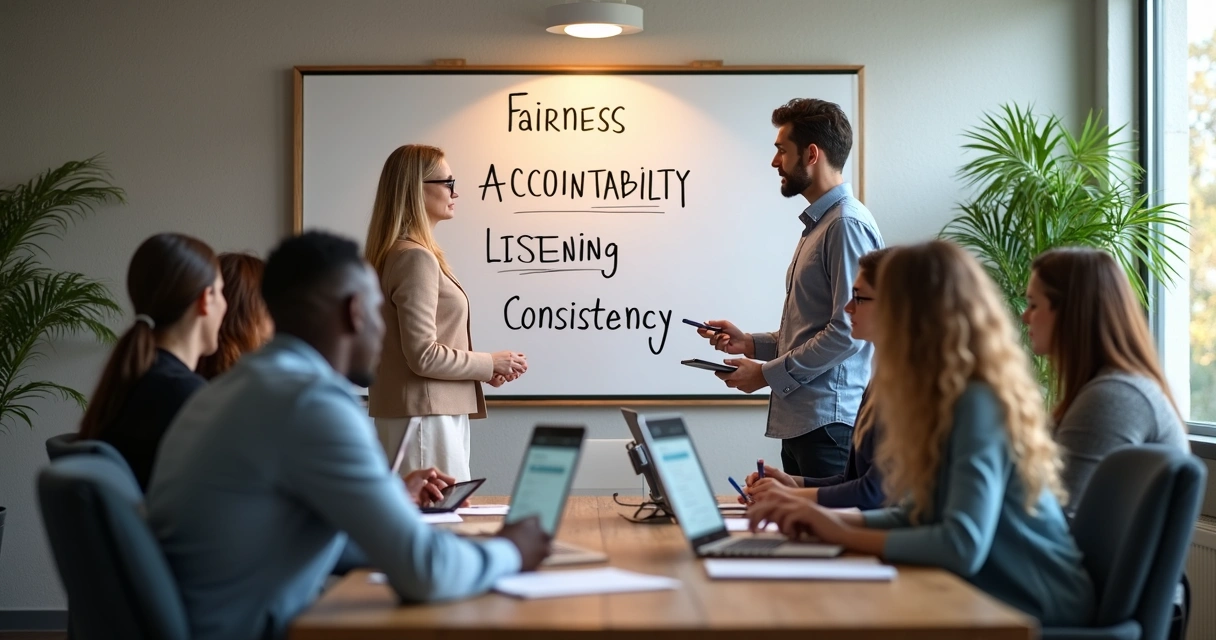
This matters because team conflict is rarely only personal. Personal tensions grow faster in weak systems. Unclear roles, uneven accountability, hidden favoritism, and poor listening all feed the same fire.
Repair becomes credible when people can see new behavior, not only hear new language.
Listening is one of the clearest examples. Gallup research on rebuilding trust shows that employees who trust leaders are about 61% more likely to stay with their employer. It also found that frequent manager feedback and strong listening sharply raise the odds of strong trust. We think this point is often underestimated. Listening is not passive. It is structural. It tells people whether truth has a place in the group.
Practices that support ethical culture
Once the first repair work starts, teams need habits that hold trust over time. Otherwise, the next conflict will reopen the same wound. We suggest simple practices because teams under stress do not need clever systems. They need clear ones.
Healthy teams often build trust through habits like these:
Regular check-ins that include relational strain, not only task status.
Shared language for speaking about impact without blame.
Clear rules for how concerns are raised and answered.
Visible consequences for breaches, including when senior people are involved.
Periodic review of unresolved tension before it hardens into distrust.
These habits work because they lower ambiguity. And ambiguity, left unchecked, becomes a breeding ground for suspicion.
We also think teams need emotional maturity, not only process. A person can follow procedure while still acting from fear, vanity, or silent hostility. Ethical culture asks more. It asks each person to notice their inner state before it spills into decisions. That is not abstract. It affects meetings, hiring, feedback, budgets, and how people speak when no one is taking notes.
What leaders must do differently
Leaders shape trust less by charisma and more by pattern. People watch for small signals. Who gets interrupted. Who gets protected. Which mistake becomes a lesson, and which becomes a scandal. These signals train the culture every day.
A leader rebuilding trust after conflict should do three things with care. First, tell the truth about what happened. Second, accept their part in the conditions that allowed it. Third, stay present long enough to see whether repair holds.
That last part is often neglected. Some leaders announce a reset and disappear into other priorities. The team notices that too.
Fairness must be seen.
If we want ethical cultures, we cannot treat conflict as an interruption to the real work. It is part of the real work. Every conflict tests whether a team can remain human, honest, and responsible under strain.
Conclusion
Systemic trust is built when teams know that conflict will not erase dignity, truth, or fairness. That kind of trust does not come from image management. It comes from steady coherence between values, emotions, and action. After conflict, the question is not whether a team can return to normal. The better question is whether it can become more truthful than before. When that happens, trust stops being fragile. It becomes part of the culture itself.
Frequently asked questions
What is systemic trust in teams?
Systemic trust in teams is the shared confidence that people, decisions, and processes will remain fair and consistent, even during stress or disagreement. It is not only personal trust between coworkers. It includes trust in how the team works as a whole.
How to rebuild trust after conflicts?
We rebuild trust after conflicts by naming the issue clearly, hearing the facts and the impact, fixing weak processes, and following through on visible commitments. Trust grows back when people see behavior change over time.
Why is ethical culture important?
Ethical culture matters because it guides behavior when pressure rises. It helps teams make fair decisions, speak honestly, and prevent repeated harm. Without ethical culture, conflict often leads to fear, silence, and hidden damage.
What causes team trust to break?
Team trust often breaks through unresolved conflict, favoritism, unclear accountability, poor listening, and gaps between stated values and actual behavior. Trust also weakens when leaders avoid truth or rush people past repair.
How can leaders promote ethical behavior?
Leaders can promote ethical behavior by acting consistently, listening well, applying standards fairly, addressing harm directly, and making room for honest feedback. Their daily patterns teach the team what is truly accepted and what is not.