
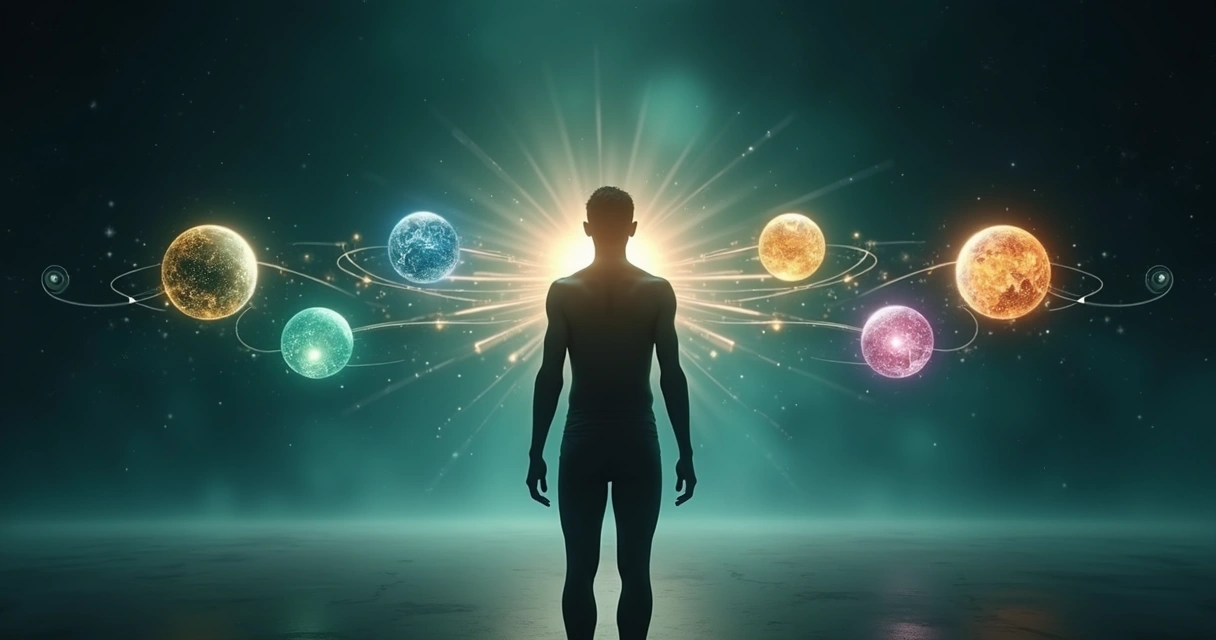
When we search for ways to align our consciousness, emotions, and actions, models that offer practical structure can make a real difference. One such approach is the Five Sciences Model—a framework built on the belief that ethics comes from within, as a day-to-day practice, not just a distant idea. In our experience, understanding this model reveals how emotional maturity leads us to more coherent choices, both personal and collective.
Understanding integrated consciousness
Many philosophies wrestle with the balance between external rules and internal purpose. We believe the Five Sciences Model starts by asking questions that matter: How do we live with awareness? How do our choices contribute to the future unfolding now?
The Five Sciences Model describes a path to authentic, ethically grounded living by integrating philosophy, psychology, and practical awareness.This integration recognizes the importance of emotional maturity and points to a harmony between thought, feeling, and action. Our decisions are not just rational calculations or reactions to rules, but the living pulse of who we truly are.
The foundation: What are the Five Sciences?
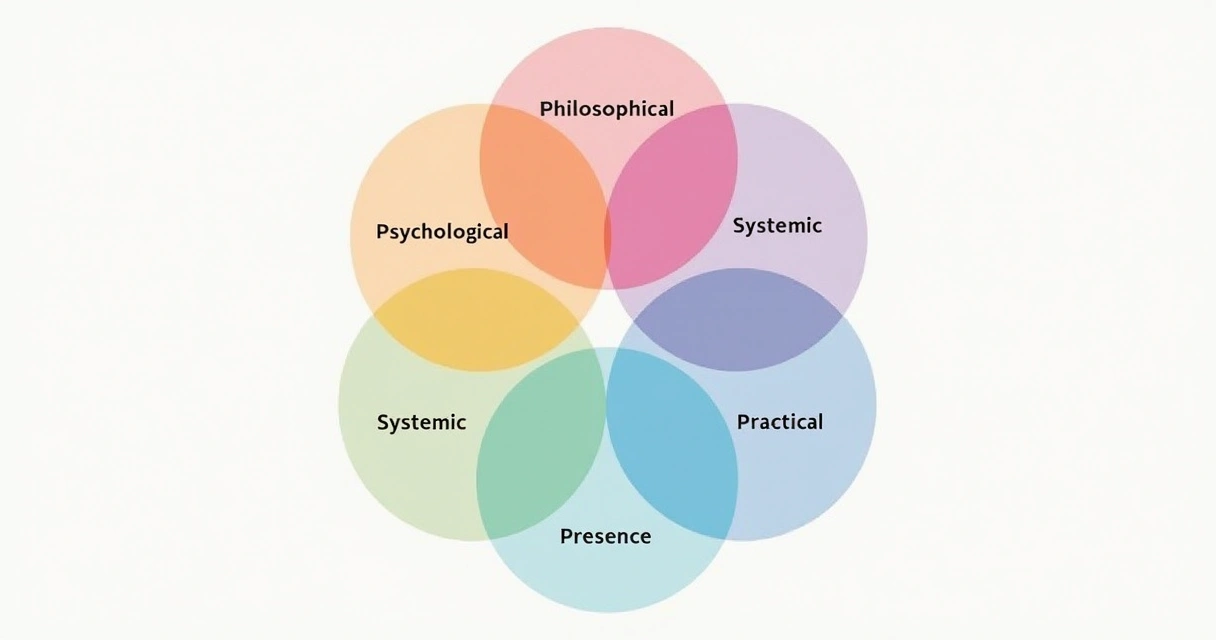
At its core, the Five Sciences Model proposes that human beings can develop five complementary dimensions of knowledge and practice:
- Philosophical Science: Understanding fundamental principles and meaning, supporting our deepest questions of existence.
- Psychological Science: Developing self-knowledge, emotional clarity, and psychological balance.
- Systemic Science: Observing interdependence between people, systems, and environments.
- Practical Science: Applying conscious action in daily life, turning internal coherence into impactful choices.
- Science of Presence: Cultivating awareness and presence, being fully here, now, with clarity and acceptance.
Each science forms a pillar; together, they build a foundation for a whole, responsible human experience.
Ethics lives in the space between our thoughts, feelings, and actions.
How the Five Sciences work together
In our view, these sciences are not separate lanes. They interact, empower, and challenge each other. When one dimension grows, others often follow. For example, developing awareness of interconnected systems (Systemic Science) can help us make more responsible daily decisions (Practical Science).
This model is less about complying with external expectations and more about generating genuine, reliable choices from within. Let us look at how each science contributes to this broader picture.
Philosophical science: searching for meaning
Philosophy has always asked: “Why are we here?” In the Five Sciences Model, philosophical inquiry does more than offer answers. It invites us to keep questioning, stay open, and nurture the humility to admit when we do not know.
Reflecting philosophically helps us identify what matters, both for us personally and for the community around us. This search for meaning gives direction to every other science.
Psychological science: understanding the self
Emotional maturity does not arise from ignoring our feelings or controlling them rigidly. Instead, it comes from seeing them clearly and understanding their origins. Psychological Science guides us to recognize our patterns, triggers, and needs.When we understand our psychological landscape, our ethical decisions become less about pleasing others and more about deep alignment.
Systemic science: the web of connection
No person lives in isolation. Our actions ripple through families, teams, organizations, and ecosystems. Systemic Science is the lens that lets us see the patterns and connections that bind us all together.
From our experience, growing this perspective helps us weigh the true impacts of our choices and fosters empathy for both people and environments.
Practical science: action in the real world
It is one thing to reflect or meditate. It is another to bring those insights into our day-to-day behaviors, conversations, and decisions. Practical Science grounds the model by inviting us to embody our values.
Wisdom means acting with what we know, not just thinking about it.
Through this lens, small acts—listening carefully, acting responsibly, even in private—become the building blocks of a trustworthy life.
Science of presence: being here, now
The fifth science is about presence—real, attentive, non-judgmental awareness. This includes mindfulness, but it can take many forms. We see presence as the energy that brings all other sciences to life.
When we are present, we anchor ourselves in clarity and openness. Every choice we make benefits from this state, leading to more integrated and meaningful action.
Growing with the Five Sciences Model
Our experience has shown us that the Five Sciences Model is not just a concept to study, but a way to live. It is ongoing, not something to "finish" or master for good. People who engage with these sciences often find changes in how they relate to themselves, to others, and to the world.
- They become more honest with their own motivations.
- They develop greater resilience and wisdom in their choices.
- They see the connections between what seems personal and what is collective.
- They practice presence instead of distraction, even when life feels difficult.
The process is not linear, and each person will find their own entry point into the Five Sciences. Some begin with philosophy, others with practical application, while others need emotional clarity first. What matters is movement, not perfection.

Conclusion
The Five Sciences Model points to a deeper integration of who we are and how we live. By bringing together philosophy, psychology, systemic thinking, conscious action, and presence, we find new clarity in every area of life.
True ethics flourish not in distant theories, but in the daily, attentive practice of aligning our minds, emotions, and actions. This model reminds us that by living with coherence, we make decisions that shape a more humane and sustainable future.
Frequently asked questions
What is the Five Sciences Model?
The Five Sciences Model is a framework for personal and collective development that integrates five dimensions: philosophy, psychology, systems thinking, practical action, and conscious presence. Its purpose is to help individuals make coherent decisions and foster ethical living.
How does the model work?
The model works by encouraging growth in all five sciences, which interact and reinforce each other. By developing each area—reflective thinking, emotional maturity, systems awareness, ethical action, and conscious presence—people become better equipped to make meaningful and responsible choices.
Who can benefit from this model?
Anyone seeking alignment between their inner values and their daily actions can benefit from this model. This includes individuals, teams, educators, leaders, and communities who want to make more conscious, responsible decisions in any environment.
Is the Five Sciences Model effective?
Many people find that applying the Five Sciences Model leads to increased self-understanding, clarity, and ethical growth. Its focus on internal coherence, rather than external rules, can provide sustainable results for those willing to engage with it.
Where can I learn more about it?
To learn more about the Five Sciences Model, we recommend connecting with educational programs and literature focused on integrated consciousness, ethical development, and personal growth. Workshops, books, and practical exercises related to these domains can offer further insights and hands-on experience.